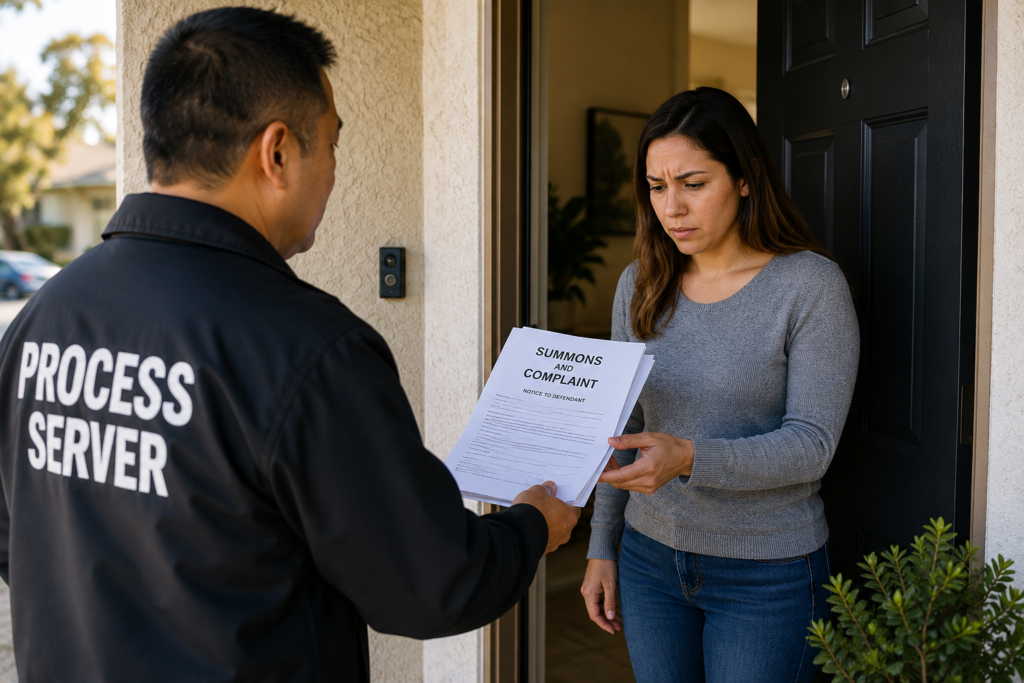
I’ve Been Served With a Small Claims Lawsuit — What Now?
Being served with a Small Claims lawsuit can be stressful, especially if you have never been involved in a court case before.
The first thing to do is stay organized and pay close attention to the documents you received. Those documents contain important information about the case, including the court, hearing date, parties involved, and the claim being made against you.
SmallClaimsCourt.Expert provides California-focused information and permitted legal document preparation services for individuals and small businesses representing themselves in California Small Claims Court.
Office: 949-208-1567
Email: help@smallclaimscourt.expert
Don’t Ignore the Documents
When you are served with a Small Claims case, the documents you receive are important.
Review the documents carefully and keep everything you received together in a safe place.
Look for information such as:
- The name of the plaintiff.
- Your name as the defendant.
- The court where the case was filed.
- The case number.
- The hearing date and time.
- The courtroom or court location.
- The amount being claimed.
- Information provided by the court concerning the hearing and procedures.
Keep the original documents and make copies for your records.
Identify Your Hearing Date
Your Small Claims documents should provide information about when and where your case is scheduled to be heard.
Write down:
Hearing Date: __________________
Hearing Time: __________________
Court: __________________
Courtroom: __________________
Keep this information somewhere you can easily find it.
Missing a hearing can have serious consequences, so make sure you understand the date, time, and location shown on your court documents.
Read Everything You Were Served
The documents you received should explain important information about the lawsuit.
Take time to read the documents carefully.
You may want to organize your paperwork into categories such as:
Court Documents
Documents issued or provided by the court.
Plaintiff’s Documents
Documents provided by the person or business that filed the claim.
Your Documents
Contracts, receipts, photographs, correspondence, emails, text messages, and other materials you may want to keep organized for your records.
Organize Your Documents
Good organization can make it easier to locate information when you need it.
Consider creating a folder containing:
- Court documents.
- The Small Claims claim you received.
- Proof of service or other service-related documents.
- Contracts or agreements.
- Receipts and invoices.
- Photographs.
- Emails.
- Text messages.
- Letters or other correspondence.
- Other documents relating to the dispute.
Do not alter or destroy documents relating to the case.
Understand the Small Claims Hearing
A Small Claims hearing is a court proceeding where the parties have an opportunity to present their positions to the judge.
The judge may ask questions and will consider the information presented during the proceeding.
Court procedures can vary depending on the circumstances of the case and the court.
SmallClaimsCourt.Expert can provide general information about Small Claims procedures and permitted document-preparation assistance, but we do not provide legal advice or tell you what arguments, defenses, or strategies you should use.
Prepare Your Hearing Materials
Before your hearing, organize the documents and materials you intend to bring with you.
Consider creating an organized hearing folder containing:
Section 1 — Court Documents
Section 2 — Claim and Service Documents
Section 3 — Supporting Documents
Section 4 — Photographs
Section 5 — Correspondence
Section 6 — Other Materials
The exact documents you need will depend on your circumstances.
If you are unsure about the legal significance of a particular document or whether you should use it, consult a California attorney.
What To Expect at Court
Before your hearing:
- Confirm the court address.
- Confirm your hearing date and time.
- Allow enough time to arrive at the courthouse.
- Bring your court documents and organized materials.
- Follow courthouse security procedures.
- Locate your courtroom.
- Listen carefully to court instructions.
- Treat the judge, court staff, and other participants respectfully.
Your hearing is a formal court proceeding. Follow the instructions of the judge and court personnel.
What Can Help With
If you are representing yourself, our role is to provide permitted legal document preparation and self-help services.
Depending on the service requested and your instructions, assistance may include:
- Preparing documents at your specific direction.
- Assisting with the completion of documents based on information you provide.
- Organizing documents and exhibits.
- Formatting documents.
- Organizing information for document preparation.
- Assisting with filing and service at your specific direction.
- Providing general procedural information.
What We Do Not Do
We do not:
- Provide legal advice.
- Represent you in court.
- Determine your legal defenses.
- Evaluate the legal merits of your case.
- Recommend legal strategies.
- Tell you what arguments to make.
- Coach witnesses.
- Tell you what legal option you should choose.
Need Help Getting Organized?
If you have been served with a California Small Claims lawsuit and are representing yourself, SmallClaimsCourt.Expert can provide permitted legal document preparation and self-help services.
Schedule a Document Preparation Appointment
Appointments are available at our Irvine office or online.
Important Disclaimer
SmallClaimsCourt.Expert is not a law firm. We are not attorneys and do not provide legal advice or legal representation. We are a California-registered Legal Document Assistant and provide legal document preparation and other self-help services permitted under California law.
Clients are responsible for making their own legal decisions and providing the information and instructions used in the preparation of their documents.
Information on this website is provided for general educational purposes and is not legal advice. Reading this website, contacting us, or using our services does not create an attorney-client relationship.
If you need legal advice concerning your particular circumstances, you should consult a qualified California attorney.